Navigating the world of personal loans can feel like deciphering a complex code. Understanding the core differences between secured and unsecured loans is crucial for making informed financial decisions. This exploration delves into the intricacies of each loan type, examining application processes, interest rates, risk assessments, and the potential consequences of default. Ultimately, the goal is to equip you with the knowledge necessary to choose the loan best suited to your individual circumstances.
This guide provides a comprehensive comparison, outlining the key distinctions between secured and unsecured loans. We’ll examine the application processes, the types of collateral involved, and the impact of creditworthiness on loan approval and interest rates. We will also explore the potential consequences of default and offer guidance on selecting the most appropriate loan option for your specific financial situation.
Impact of Default
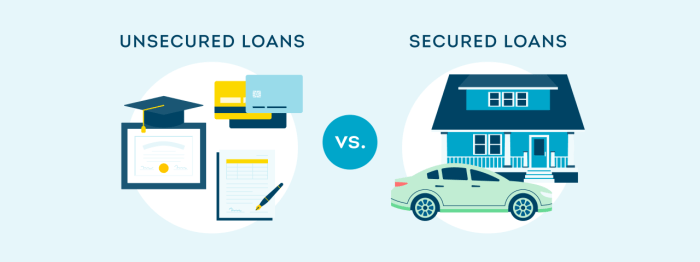
Defaulting on a loan, whether secured or unsecured, carries significant consequences that can severely impact your financial well-being and creditworthiness. Understanding these repercussions is crucial before taking on any debt. The severity of the consequences varies greatly depending on the type of loan and the lender’s policies.Defaulting on a secured loan has far more serious implications than defaulting on an unsecured loan.
This is because the lender has a claim on a specific asset you own, used as collateral.
Consequences of Defaulting on a Secured Loan
Defaulting on a secured loan, such as a mortgage or auto loan, means the lender can seize and sell the asset used as collateral to recover the outstanding debt. For a mortgage, this could mean losing your home; for an auto loan, it could mean losing your car. Beyond the loss of the asset, you may still owe the lender money if the sale of the collateral doesn’t cover the full loan amount.
This remaining debt is known as a deficiency balance and will negatively impact your credit score. Furthermore, the foreclosure or repossession process can damage your credit history significantly, making it harder to obtain loans or credit in the future. Late payment fees and legal costs associated with the recovery process can add to your financial burden.
Consequences of Defaulting on an Unsecured Loan
Defaulting on an unsecured loan, like a credit card or personal loan, doesn’t involve the risk of losing a specific asset. However, the consequences are still severe. Your credit score will suffer a substantial drop, making it difficult to secure future loans, rent an apartment, or even get certain jobs. Debt collection agencies will aggressively pursue repayment, potentially resorting to repeated phone calls, letters, and even legal action.
These actions can cause considerable stress and anxiety. While you won’t lose a specific asset, the damage to your credit and the potential legal costs can be substantial.
Legal Ramifications of Default
The legal ramifications of defaulting on a secured loan are more immediate and potentially severe than those for an unsecured loan. With a secured loan, the lender can initiate legal proceedings to repossess the collateral relatively quickly. This often involves court orders and may result in additional fees and legal costs. For unsecured loans, while legal action is still possible, the process is often lengthier and may involve lawsuits to obtain a judgment against the borrower.
This judgment can lead to wage garnishment or bank account levies. Both secured and unsecured loan defaults can result in a negative impact on your credit report, which remains for several years. The specifics of the legal process vary by jurisdiction and the terms of the loan agreement.
Debt Collection Practices
Debt collection practices for both secured and unsecured loans can be aggressive. For secured loans, the lender may directly repossess the collateral without lengthy legal proceedings. For unsecured loans, debt collection agencies may employ various tactics, including repeated phone calls, letters, and even threatening legal action. They might attempt to negotiate a payment plan or sell the debt to another collection agency.
In some cases, lawsuits may be filed to obtain a court judgment. It’s crucial to understand your rights as a debtor and to communicate openly with the lender or collection agency to explore potential solutions. Ignoring debt collection attempts will only worsen the situation. For example, a lender might sell a defaulted mortgage to a collection agency, which may then pursue the homeowner more aggressively for repayment of the debt.
Similarly, a credit card company might send the debt to collections after repeated failed attempts at repayment, resulting in more aggressive collection calls and potential legal action.
Choosing the Right Loan
Selecting between a secured and an unsecured loan is a crucial decision that significantly impacts your financial future. The choice hinges on several factors, primarily your creditworthiness, the loan amount needed, and your risk tolerance. Understanding these aspects is vital for making an informed decision that aligns with your financial capabilities and long-term goals.Understanding the differences between secured and unsecured loans is the first step.
Secured loans require collateral – an asset you own, such as a house or car, that the lender can seize if you default. Unsecured loans, conversely, don’t require collateral; instead, they rely on your credit history and income to assess your creditworthiness. This difference significantly impacts the interest rates and loan terms offered.
Factors to Consider When Choosing a Loan Type
Several key factors influence the suitability of a secured versus an unsecured loan. These include the loan amount, interest rates, repayment terms, and your credit score. A higher credit score typically qualifies you for lower interest rates and more favorable terms on both secured and unsecured loans. However, the impact of a low credit score is much more severe on unsecured loans.
Step-by-Step Guide to Choosing a Loan
A systematic approach to loan selection ensures you choose the best option for your circumstances.
- Assess Your Needs: Determine the precise amount you require and the purpose of the loan. This will help you narrow down the type of loan suitable for your needs. For example, a large loan for a house purchase will likely necessitate a secured loan (mortgage), while a smaller loan for home improvements might be feasible as an unsecured personal loan.
- Check Your Credit Score: Obtain your credit report and score from a reputable credit bureau. A good credit score significantly improves your chances of securing a loan with favorable terms. A poor score might limit your options to secured loans or loans with high-interest rates.
- Compare Loan Offers: Once you’ve determined your creditworthiness, research and compare loan offers from different lenders. Pay close attention to interest rates, fees, and repayment terms. Consider both secured and unsecured options if eligible for both.
- Evaluate Collateral Availability: If considering a secured loan, assess the value of any assets you could use as collateral. Ensure the value of the collateral significantly exceeds the loan amount to mitigate risk.
- Analyze Repayment Capabilities: Carefully evaluate your monthly budget and income to determine if you can comfortably afford the monthly loan repayments. Failing to do so can lead to default and severe financial consequences.
- Make an Informed Decision: Based on your assessment of your needs, creditworthiness, and available resources, make an informed decision about whether a secured or unsecured loan best suits your financial situation.
Decision Tree for Loan Selection
The following decision tree simplifies the process of selecting the appropriate loan type:
- Do you need a large loan amount (e.g., for a house or car)?
- Yes: Consider a secured loan (mortgage or auto loan).
- No: Proceed to the next question.
- Do you have a good credit score?
- Yes: You may qualify for both secured and unsecured loans. Compare interest rates and terms to determine the best option.
- No: A secured loan might be your only viable option, as unsecured loans may be difficult or impossible to obtain.
- Do you have valuable assets to use as collateral?
- Yes: A secured loan is a possibility.
- No: An unsecured loan might be your only option, but be prepared for potentially higher interest rates.
Choosing between a secured and unsecured loan requires careful consideration of your financial situation and risk tolerance. While secured loans often offer lower interest rates due to the presence of collateral, they also carry the risk of asset seizure in case of default. Unsecured loans, conversely, provide greater flexibility but typically come with higher interest rates. By understanding the nuances of each loan type and assessing your own financial profile, you can make a well-informed decision that aligns with your long-term financial goals and minimizes potential risks.
Questions and Answers
What is the difference between an origination fee and an application fee?
An origination fee is a one-time charge paid to the lender for processing your loan application, while an application fee is a separate fee paid simply for applying, regardless of approval.
Can I refinance a secured loan into an unsecured loan?
Generally, no. Refinancing typically involves replacing an existing loan with a new one, often with better terms. However, converting a secured loan to an unsecured one is unlikely due to the increased risk for the lender.
How does my credit score impact loan approval and interest rates?
A higher credit score demonstrates creditworthiness, leading to higher chances of loan approval and lower interest rates for both secured and unsecured loans.
What happens if I miss a payment on a secured loan?
Missing payments on a secured loan can result in late fees, increased interest rates, and ultimately, repossession of the collateral.