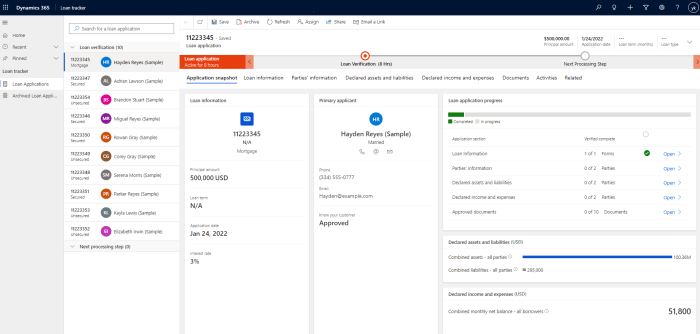
Navigating the loan application process can feel like traversing a complex maze. Understanding how loan applications are tracked is crucial, whether you’re a lender assessing risk or a borrower seeking financial assistance. This guide provides a clear and concise overview of loan application tracking systems, encompassing their functionalities, benefits, and the technological advancements shaping their future.
From manual processes to sophisticated automated systems leveraging AI and machine learning, we’ll explore the evolution of loan application tracking. We’ll examine the various types of loans, the necessary documentation, and best practices for efficient and accurate application completion. Security and privacy concerns are paramount, and we’ll delve into the measures taken to protect sensitive borrower data throughout the process.
Understanding Loan Application Tracking Systems
Loan application tracking systems are crucial tools in the modern lending landscape, streamlining the process for both lenders and borrowers. These systems provide a centralized platform to manage and monitor the progress of loan applications, improving efficiency and transparency throughout the entire lending cycle.Loan application tracking systems offer a range of functionalities designed to optimize the loan application process.
These functionalities improve efficiency and reduce the risk of errors or delays.
Core Functionalities of Loan Application Tracking Systems
A typical loan application tracking system provides several key functionalities. These include the ability to input and manage applicant data, automate status updates, generate reports, and integrate with other lending systems. Specific features can vary depending on the system’s sophistication and the lender’s needs, but core functions typically involve data entry, workflow management, communication tools, and reporting capabilities.
For instance, a system might automatically send email notifications to applicants at key stages of the process, or generate reports summarizing the overall application pipeline.
Types of Loan Applications Tracked
These systems can handle a wide variety of loan applications. This adaptability makes them valuable tools for lenders offering diverse financial products.The range of loan types that can be tracked includes, but isn’t limited to, mortgage loans, personal loans, auto loans, business loans, and student loans. Each loan type may require specific data fields and workflows within the tracking system, but the underlying principle of centralized management and progress monitoring remains consistent.
For example, a mortgage loan application might require tracking appraisal reports, title searches, and underwriting reviews, while a personal loan application might focus on credit checks and income verification.
Benefits of Loan Application Tracking Systems
The advantages of using loan application tracking systems are significant for both lenders and borrowers. These systems lead to a smoother, more efficient loan process.For lenders, benefits include improved efficiency, reduced processing times, better risk management, enhanced compliance, and increased transparency. For borrowers, the benefits include increased transparency into the application process, faster processing times, and improved communication with the lender.
Using a tracking system allows lenders to monitor key performance indicators (KPIs) such as application processing time, approval rates, and loan disbursement times. This data can inform strategic decisions and identify areas for improvement.
Comparison of Manual and Automated Loan Application Tracking
Manual and automated systems offer distinct approaches to managing loan applications, each with its own set of advantages and disadvantages.
| Method | Efficiency | Cost | Accuracy |
|---|---|---|---|
| Manual | Low; prone to delays and bottlenecks. | Relatively low initial investment, but high labor costs. | High risk of human error leading to inaccuracies. |
| Automated | High; streamlines processes and reduces processing times. | Higher initial investment in software and infrastructure, but lower long-term labor costs. | Lower risk of error due to automated data processing and validation. |
The Loan Application Process
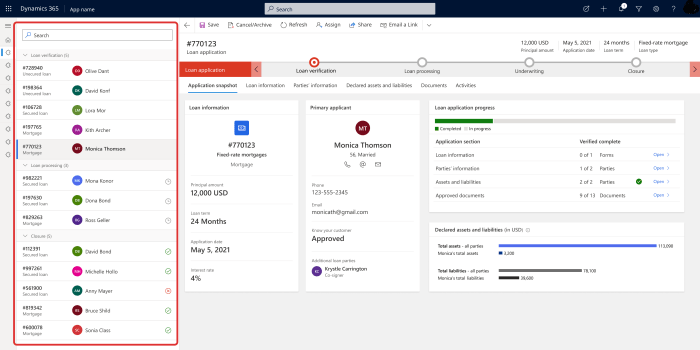
Securing a loan involves a multi-step process that requires careful preparation and accurate documentation. Understanding this process can significantly increase your chances of a successful application and a smooth borrowing experience. This section details the typical steps involved, the necessary documentation, and best practices for efficient application completion.
Steps in a Typical Loan Application Process
The loan application process generally follows a structured sequence, although specific steps and timelines may vary depending on the lender and loan type. A thorough understanding of these steps will help applicants navigate the process effectively.
- Pre-qualification/Pre-approval: This initial step involves assessing your financial situation to determine your eligibility for a loan and the potential loan amount. Lenders will typically request basic financial information, such as income, debts, and credit score.
- Formal Application: Once pre-qualified or pre-approved, you’ll complete a formal loan application, providing detailed personal and financial information. This often involves completing an online form or submitting a physical application.
- Document Submission: This stage requires submitting all necessary supporting documentation, which varies depending on the loan type. This is crucial for the lender to verify your financial standing and eligibility.
- Underwriting Review: The lender’s underwriters thoroughly review your application and supporting documents to assess your creditworthiness and the risk associated with lending you money. This process can take several days or weeks.
- Loan Approval or Denial: Based on the underwriting review, the lender will either approve or deny your loan application. If approved, you’ll receive a loan offer outlining the terms and conditions.
- Loan Closing: If you accept the loan offer, you’ll proceed to the loan closing process, which involves signing the loan documents and finalizing the disbursement of funds.
Required Documents for a Loan Application
Providing complete and accurate documentation is paramount for a smooth and timely loan application process. Missing or inaccurate documents can significantly delay the process or even lead to application rejection.
The specific documents required vary depending on the type of loan (e.g., mortgage, auto loan, personal loan) and the lender. However, common requirements often include:
- Proof of Identity: Driver’s license, passport, or other government-issued identification.
- Proof of Income: Pay stubs, W-2 forms, tax returns, or bank statements demonstrating consistent income.
- Proof of Address: Utility bills, bank statements, or rental agreements.
- Credit Report: A copy of your credit report, showing your credit history and score.
- Bank Statements: Statements showing your account balances and transaction history.
- Asset Documentation: Documentation for any assets you’re using as collateral (e.g., vehicle title, property appraisal).
Flowchart Illustrating the Loan Application Stages
A visual representation of the loan application process can be helpful. Imagine a flowchart beginning with “Application Submission,” flowing to “Document Review,” then branching to “Credit Check” and “Income Verification.” These paths converge at “Underwriting Review,” which then leads to either “Loan Approval” or “Loan Denial.” From “Loan Approval,” the process moves to “Loan Closing” and finally “Funds Disbursement.” “Loan Denial” might include a path for “Appeal” or “Application Resubmission.”
Best Practices for Completing a Loan Application
Accuracy and efficiency are key to a successful loan application. Following these best practices will streamline the process and improve your chances of approval.
Thoroughly review all application forms before submitting them. Ensure all information is accurate and complete. Gather all necessary documents beforehand to avoid delays. Maintain clear and concise communication with your lender throughout the process. If you have any questions, do not hesitate to contact the lender directly for clarification.
Features of Effective Tracking Systems
A robust loan application tracking system significantly streamlines the lending process for both borrowers and lenders. Key features contribute to efficiency, transparency, and a positive user experience, ultimately leading to faster processing times and improved customer satisfaction. These features are not merely add-ons; they are integral components of a well-designed system.Effective loan application tracking systems offer a range of functionalities designed to simplify and expedite the loan process.
The core functionality centers around providing clear visibility into the application’s progress, facilitating efficient communication, and ensuring data security. A well-implemented system allows for better resource allocation and reduces the risk of errors, ultimately improving the overall efficiency of the loan origination process.
Real-time Updates and Notifications
Real-time updates and timely notifications are critical components of a user-friendly loan application tracking system. These features provide borrowers and lenders with immediate visibility into the status of the application, eliminating the need for constant inquiries and reducing uncertainty. For example, a borrower can receive instant notifications regarding application receipt, document verification completion, and approval or rejection decisions. Lenders benefit from real-time dashboards displaying the progress of multiple applications simultaneously, enabling efficient resource management and proactive issue resolution.
This immediacy reduces processing times and fosters trust between the lender and the borrower.
Data Security and Privacy Measures
Data security and privacy are paramount in loan application tracking systems, given the sensitive nature of the information involved. Robust security measures are crucial to protect borrower data from unauthorized access, breaches, and misuse. Compliance with relevant data protection regulations, such as GDPR and CCPA, is essential. Failure to implement adequate security can lead to significant financial and reputational damage, eroding trust and potentially resulting in legal penalties.
- Data Encryption: All data transmitted and stored within the system should be encrypted using strong encryption protocols, such as AES-256, to prevent unauthorized access.
- Access Control: Implementing role-based access control ensures that only authorized personnel can access specific data, limiting potential exposure.
- Regular Security Audits: Periodic security audits and penetration testing identify vulnerabilities and ensure the system’s ongoing security.
- Multi-Factor Authentication: Requiring multi-factor authentication for all users adds an extra layer of security, making it significantly more difficult for unauthorized individuals to gain access.
- Data Loss Prevention (DLP): DLP measures help prevent sensitive data from leaving the system unauthorized, protecting against accidental or malicious data leaks.
Impact of Technology on Loan Application Tracking
The integration of technology has revolutionized loan application tracking, significantly improving efficiency and accuracy across the entire process. From initial application submission to final approval, technological advancements have streamlined workflows, reduced processing times, and enhanced the overall borrower experience. This section explores the specific ways technology impacts loan application tracking, focusing on the roles of AI, automation, and mobile applications.
Improved Loan Application Processing Speed Through AI and Machine Learning
Artificial intelligence (AI) and machine learning (ML) algorithms significantly accelerate loan application processing. These technologies analyze vast amounts of data – including credit scores, income verification, and debt-to-income ratios – far quicker than human reviewers. AI can identify patterns and anomalies that might indicate risk or fraud, enabling faster and more informed decisions. For example, AI-powered systems can automate the verification of income and employment data, reducing manual processing time from days to hours.
ML algorithms, through continuous learning from past data, improve their accuracy in predicting loan defaults, allowing lenders to make more informed lending decisions and expedite the approval process for low-risk applicants. This speed increase translates to a quicker turnaround time for borrowers, improving customer satisfaction.
Automation Streamlines the Loan Application Tracking Process
Automation plays a crucial role in streamlining the loan application tracking process. Robotic Process Automation (RPA) tools can automate repetitive tasks such as data entry, document verification, and communication with borrowers. This frees up human employees to focus on more complex tasks, requiring higher-level decision-making and judgment. For instance, an automated system can automatically update the application status in the tracking system as it moves through different stages of the approval process.
This eliminates the need for manual updates, reducing the potential for errors and delays. Furthermore, automated email reminders and notifications keep borrowers informed about the progress of their applications, enhancing transparency and communication.
The Role of Mobile Applications in Tracking Loan Applications
Mobile applications have become increasingly important in loan application tracking, offering borrowers real-time access to their application status and related information. Through dedicated apps, borrowers can conveniently upload documents, track the progress of their applications, and communicate directly with lenders. This enhanced transparency and accessibility improves the overall borrower experience, fostering trust and satisfaction. Features like push notifications for application updates ensure borrowers are immediately informed of any significant changes in their application status.
This level of real-time access empowers borrowers and keeps them actively engaged throughout the loan application process.
Technological Impact on Loan Application Tracking: Advantages, Disadvantages, and Costs
The following table summarizes the advantages, disadvantages, and implementation costs associated with various technologies used in loan application tracking.
| Technology | Advantages | Disadvantages | Implementation Cost |
|---|---|---|---|
| AI/ML | Faster processing, improved accuracy, reduced errors, better risk assessment | High initial investment, requires skilled personnel, potential for bias in algorithms | High |
| RPA | Automation of repetitive tasks, increased efficiency, reduced manual errors | Limited flexibility, can be difficult to integrate with existing systems, requires initial setup | Medium |
| Mobile Applications | Improved borrower experience, increased transparency, enhanced communication, real-time updates | Requires ongoing maintenance and updates, potential for security breaches, may not be accessible to all borrowers | Medium-Low |
| Cloud-Based Systems | Scalability, accessibility, cost-effectiveness, data security | Dependence on internet connectivity, potential for data breaches, vendor lock-in | Medium |
LOAN APPLICATION
The loan application process, while crucial for both borrowers and lenders, is often fraught with challenges that can impact efficiency and satisfaction. Understanding these challenges and implementing effective solutions is key to streamlining the process and improving overall outcomes. This section will examine common hurdles encountered during loan application and propose practical strategies for improvement, focusing on the role of a robust tracking system.
Common Challenges in Loan Applications
Inefficient processes, communication breakdowns, and inadequate error handling are frequent sources of friction in loan applications. Delays, inaccuracies, and a lack of transparency can frustrate borrowers and increase administrative burdens for lenders. These issues often stem from outdated systems, inadequate staff training, or a lack of integration between different parts of the application process. For example, manual data entry can lead to errors, while a lack of real-time updates leaves both parties uncertain about the application’s status.
A poorly designed system can also make it difficult to identify and resolve issues promptly.
Solutions for Improving Loan Application Tracking Efficiency
Implementing a comprehensive and user-friendly loan application tracking system is crucial for addressing these challenges. This system should offer real-time updates, automated notifications, and a centralized repository for all application documents and communications. Features like automated data validation and error checking can minimize manual intervention and reduce the likelihood of errors. Furthermore, integration with other systems, such as credit bureaus and appraisal services, can significantly streamline the process.
For instance, automated credit score retrieval eliminates manual steps and speeds up processing. The use of a robust workflow management system ensures that applications move through the various stages efficiently and consistently. A well-designed system should also incorporate features that facilitate secure communication between lenders and borrowers.
Enhancing Communication Between Lenders and Borrowers
Effective communication is paramount to a smooth loan application process. A robust tracking system should provide a secure platform for lenders and borrowers to exchange information, ask questions, and track progress. This could involve features like secure messaging, progress dashboards, and automated email notifications. For example, automated emails confirming application receipt, updates on processing status, and requests for additional documentation improve transparency and reduce uncertainty.
Regular communication helps to build trust and ensures that both parties are informed throughout the process. The system should also provide easy access to frequently asked questions and support resources.
Handling Application Errors and Rejections Effectively
A well-designed system should incorporate mechanisms for identifying and handling errors and rejections effectively. This involves clear error messages, guidance on correcting errors, and a streamlined process for resubmitting applications. For rejected applications, the system should provide clear explanations of the reasons for rejection, along with suggestions for improvement. For example, if an application is rejected due to insufficient income, the system might suggest alternative loan products or provide resources for improving financial standing.
This approach minimizes frustration and guides borrowers towards a successful application. The system should also maintain a detailed audit trail of all application actions, including errors, corrections, and decisions, to ensure accountability and facilitate future improvements.
Effective loan application tracking is no longer a luxury but a necessity in the modern financial landscape. By embracing technological advancements and implementing robust systems, lenders can streamline operations, reduce processing times, and enhance the overall borrower experience. The future of loan application tracking points towards increased automation, personalized service, and even more secure data handling, ultimately leading to a more efficient and transparent lending process for all parties involved.
FAQs
What happens if my loan application is incomplete?
Incomplete applications are typically returned to the borrower with a request to provide the missing information. Processing will resume once all required documents are submitted.
How long does it typically take to process a loan application?
Processing times vary significantly depending on the loan type, lender, and completeness of the application. However, many lenders aim for decisions within a few days to a few weeks.
Can I track my loan application online?
Many lenders offer online portals or mobile apps allowing borrowers to track the status of their application in real-time.
What if my loan application is denied?
Loan denials usually come with an explanation outlining the reasons for the rejection. Borrowers can often appeal the decision or seek guidance on improving their application for future submissions.


